Showing posts with label Quotes. Show all posts

Friday, April 09, 2010

Words to think with

(Cross-posted at In Search of the Perilous Realm)

The semester has dwindled to a sliver of its former self, the way an ice cube shrinks when you pour water over it in the sink, and I am just watching and waiting now for the last few weeks to melt away. And I'm studying, of course. And rehearsing. And writing papers. And memorizing lines. And planning summer projects. And summer trips. And summer work. And next semester's classes. And vacillating, all the while, between bleary-eyed complaints about the workload and moments of utter wonder that I am allowed to eat and drink and breathe history, literature, philosophy, music; that I have lived through the hardest winter in living memory to see a spring which is the loveliest in history, as every spring is; that I love and am loved by a woman who is fair and seemly and wise beyond my highest hopes; that I continue to wake up every morning to find that someone else has been up before me scrubbing the sky and pulling up the sun and pouring dew on the grass—in short, that I keep on living in God's good earth under God's bright heaven. This must be the way a sprout feels when it wakes up from hibernation in its seedpod to find itself planted in rich soil with clean air swirling around it and the sun beaming down overhead.

Meanwhile, time slips away from me and it's early morning and I should try going to bed. I oughtn't to be blogging at all, except that I was studying late and broke policy and bought a coke and now I'm awake on caffeine. I'll rue it tomorrow.

I heard a lecture this morning about modern women who are writing—Annie Dillard and Toni Morrison and people like that. It was a good lecture from start to finish, but this simple quote stood out to me. It comes from Toni Morrison, whom I've not read. It returns to the question of ownership, which I've pondered before, but Morrison makes it more personal that Steinbeck did:

Freeing yourself was one thing; claiming ownership of that freed self was another.
Words to think with, words to live by...

Monday, March 08, 2010

Ownership

From The Grapes of Wrath, which I'm reading for school:

...It's our land. We measured it and broke it up. We were born on it, and we got killed on it, and died on it. Even if it's no good, it's still ours. That's what makes it ours—being born on it, working it, dying on it. That makes ownership, not a paper with numbers on it.
What do we mean when we say we own something? The word has different shades of meaning. We say we "own" our clothes, by which we mean they are our property. But we also say we "own" someone as a friend, by which we mean we acknowledge the relationship, not that we possess them. What makes something our property? A book may sit on your shelf, but can you really say it's yours until you've read it and slipped bookmarks in the folds or dog-eared the pages or stuck sticky notes to favorite paragraphs or added notes in the margins or whatever you do with books—in other words, until you've made it yours by spending time with it and letting part of yourself become involved in it? The relationship makes it yours, not the purchase.

Friday, January 01, 2010

Happy New Year!

In my reading this morning I came across this passage from Psalm 4 which seems befitting for the start of the new year.

Many people say, "Who will show us better times?"
     Let the smile of your face shine on us, Lord.
You have given me greater joy
     than those who have abundant harvests of grain and wine.

I will lie down in peace and sleep,
     for you alone, O Lord, will keep me safe.
I love this. It is at once a prayer for blessing, a song of thanksgiving, and an expression of trust. As the year begins we are all hoping for better days, days of peace and plenty. The psalmist directs us to God, who is the foundation of all our hopes. He gives thanks for last year's blessings, and reminds us that we are blessed whether or not we've had an abundant harvest, because we have been given life and love by our God. Finally, he reaffirms our trust in God by reminding us to rest, to keep Sabbath with God, because it is he who keeps us safe, whether we wake or sleep.

Have a blessed new year, everyone!

Sunday, April 19, 2009

Dylan Thomas on poetry

I've been studying Dylan Thomas and his poetry for a paper I'm writing, about his play "Under Milk Wood." In my reading today I stumbled upon this quote which I love:

You can tear a poem apart to see what makes it technically tick, and say to yourself, when the works are laid out before you, the vowels, the consonants, the rhymes or rhythms, 'Yes, this is it. This is why the poem moves me so. It is because of the craftsmanship.' But you're back again where you began.

You're back with the mystery of having been moved by words. The best craftsmanship always leaves holes and gaps in the works of the poem so that something that is not in the poem can creep, crawl, flash, or thunder in.
- Dylan Thomas, "Notes on the Art of Poetry"

Sunday, November 09, 2008

The meaning of grace

(From The Time Garden by Edward Eager. The setting: Jack, Eliza, Roger, and Ann travel back in time to the days of the Revolution with the help of the magical Natterjack. Having mustered the minutemen, caused an Indian massacre, and nearly gotten themselves killed, they return to the Natterjack with guilty consciences for all the mayhem they've caused. Oh, and the Natterjack is a Cockney Natterjack, you should know, so 'e 'as trouble with 'is haitches.)

     "We've been thinking now," said Ann. "And I've been wondering. About those people."
     And she told the Natterjack her worries about the Indian massacre.
     The Natterjack was silent in thought. Then it spoke. "I 'ave 'eard," it said, "that the h'evil that men do lives after them..."
     " 'The good is oft interred with their bones,' " Ann finished the quotation. Then a look of horror came over her face. "Do you mean the bad things we do last, and the good ones don't?"
     "That wouldn't be fair," said Roger.
     "It would be just like magic, though," said Eliza, "always thwarting us!"
     "I was thinking," said the Natterjack, "more the other way round."
     "You mean...?" Roger puzzled it out. "You mean the mistakes we make come out of the adventure with us, and don't do any harm, but the good things we do stay buried in the past, and turn real?"
     "That," said the Natterjack, "is the general h'idea."

Saturday, November 01, 2008

Halloween and quothiness

I hope everyone had a good Halloween! I spent mine at a Harry Potter party with a company of college friends. There were about a dozen of us, all dressed as different characters. Harry and Ginny were there, in Quidditch uniforms, and Hermione and Neville and Ron and some of the other Weasleys. A professor came as Dumbledore, and his wife dressed as Professor Sprout. There were Rowena Ravenclaw and Fleur Delacour and Lily Evans (Potter). And I was Snape. We had a great time: there was a trivia contest and a movie, and plenty of nerdy discussion and merriment.

We had an excellent lecture in chapel last week about All Saints' Day, and its importance as a Christian holiday, celebrating the church itself: the saints present and past--the company of believers we live among and the cloud of witnesses that fights with us. I wish I had time to write more about it.

Meantime, there are a couple of quotes that struck me this week. This one was in the chapel service: "Perfection, in a Christian sense, means becoming mature enough to give ourselves to others." That's from Kathleen Norris, 20th century poet and Benedictine oblate. While looking up that quote I found several others from Kathleen Norris that were good, among them: "Just the knowledge that a good book is awaiting one at the end of a long day makes that day happier." I think I shall have to read some of her writings.

I also liked this quote from the photographer Gary Monroe: "One must have an appetite for failure. Ninety-nine percent of my photographs are near misses. I don't make photographs for recognition. I make them for my edification."

Monday, July 28, 2008

Two Quotes

Sometimes when you're reading you find a quote that makes you stop and think--the mental equivalent of stepping on the brake--but you merely note it as you pass, assuming that it was an interesting tidbit which shall quickly be forgotten. But you don't forget it. It stays with you and keeps coming back at unexpected times, like a theme in a Wagnerian opera, displaying its depth and strength over and over again until it gains a place in your mental library of leitmotifs. These quotes were like that for me.

The first is from a book about E.M. Bounds, a Civil War chaplain and writer of books on theology:

[E.M. Bounds]...was never overheard to vindicate or defend his own actions or stand. That intensely human need to explain ourselves and make others understand, what St. Augustine called "this lust of always vindicating myself," was overcome by this magnetic preacher of the gospel.
- Lyle Wesley Dorsett, E.M. Bounds: Man of Prayer

The second is a C.S. Lewis quote that the Headmistress used in one of her posts over at the Common Room:
The great thing, if one can, is to stop regarding all the unpleasant things as interruptions of one’s ‘own,’ or ‘real’ life. The truth is of course that what one calls the interruptions are precisely one’s real life—the life God is sending one day by day; what one calls one’s ‘real life’ is a phantom of one’s own imagination. This at least is what I see at moments of insight: but it’s hard to remember it all the time.
- The Letters of C. S. Lewis to Arthur Greeves (20 December 1943)

May I say that I think this a comforting thought? It means that I don't have to worry about my life not turning out the way I think it should, because my idea of What My Life Should Be was never real anyway. The true meaning of my life isn't what it means to me; it has meaning beyond all my thoughts and dreams, grounded forever in Something that is true and unchangeable. As the hymn says:
My life is hid with Christ on high,
With Christ my Savior and my God.

Tuesday, July 15, 2008

Quote for Pip

In my Twilight review I mentioned a C.S. Lewis quote, and I think this is the one I was thinking of:

"In this sub-species [of bad science fiction] the author leaps forward into an imagined future when planetary, sidereal, or even galactic travel has become common. Against this huge backcloth he then proceeds to develop an ordinary love-story, spy-story, wreck-story, or crime-story. This seems to me tasteless. Whatever in a work of art is not used, is doing harm. The faintly imagined, and sometimes strictly unimaginable, scene and properties, only blur the real theme and distract us from any interest it might have had." (C.S. Lewis, On Science Fiction, in the collection Of Other Worlds)

There's also this one: "I have sometimes wondered whether the 'excitement' may not be an element actually hostile to the deeper imagination." That's taken from On Stories (also in Of Other Worlds), in which Lewis is arguing that there is more that draws us to story than the action and suspense of the plot. It's an excellent essay; if you ever get the chance, read it.

Sunday, July 13, 2008

Twilight

I also read the first three Twilight books this week. They were engaging some of the time (I like Alice) but I found them rather frustrating. Stephanie Meyers has a good story in there, but she can't seem to find it. (Not that I won't read the fourth book too when I get the chance...) Anyway, I've been thinking about the books in relation to three quotes.

The first is C.S. Lewis's, which I shall have to paraphrase because our internet is still down and I am working away from home and I don't have my copy of Of Other Worlds with me. Lewis said that there are certain ideas that can only be explored with fantasy. But many writers unfortunately jump onto the fantasy bandwagon, missing the point of fantasy and writing "fantasy" stories that could just as well--or better--be written without the fantasy element. Lewis laid down a general rule, that if the fantastic element isn't integral to your story--drop it.

Stephanie Meyers seems to me to have this problem. She has the makings of a great fantasy story in the love affair between a mortal and a vampire (I'm hearing echoes of Tuck Everlasting and the Lay of Luthien), but she instead fills her story with irrelevant action and teen angst.

I'll leave the other two quotes without commentary.

"Love, having become a god, becomes a demon." (C.S. Lewis, The Four Loves)

"Q: Maybe writing is some kind of Resurrection Stone.
"A: Yes, of course, but I think you realize that once you’re writing to make a dream come true. If it’s just like that then, for me, writing loses its worth. Describing your fantasy is not the same as creating a world." (J.K. Rowling, interview with Spanish magazine El Pais)

Sunday, March 16, 2008

The Scarlet Letter quotes

These are all from the Introductory. I've started the actual story, but these are all from before the story.

"It is a good lesson--though it may often be a hard one--for a man who has dreamed of literary fame, and of making for himself a rank among the world's dignitaries by such means, to step aside out of the narrow circle in which his claims are recognized, and to find how utterly devoid of significance, beyond that circle, is all that he achieves, and all he aims at."

I think the above lesson would be good for anyone dreaming of fame and glory, not just writers.

And this next one reminded me of the nature of Postal work. Once you're in, the job is so secure that it can breed a lack of initiative and foster a dependence on the system. I guess this could be said of anyone who comes to depend on a government job of government help. In this case, it's being said about a person employed as a customs official.

"An effect--which I believe to be observable, more or less, in every individual who has occupied the position--is, that, while he leans on the mighty arm of the Republic, his own proper strength departs from him. He loses, in an extent proportioned to the weakness or force of his original nature, the capability of self-support. . . Why should he toil and moil, and be at so much trouble to pick himself up out of the mud, when, in a little while hence, the strong arm of his Uncle will raise and support him? Why should he work for his living here, or go to dig gold in California, when he is so soon to be made happy, at monthly intervals, with a little pile of glittering coin out of his Uncle's pocket?"

Tuesday, March 04, 2008

Quote about C.S. Lewis from J Austen Book

"C.S. Lewis said every time you make a decision, you change the central part of you that chooses. He meant moral choices--whenever you choose to lie, for example, or not to lie, you change the substance of who you are and what you are likely to do the next time you have a choice to make."
(from A Walk with Jane Austen by Lori Smith)

She says the quote is in Mere Christianity. It reminds me of Charlotte Mason's perception of habit, how it changes the substance of the brain.

Quote on American Christianity from a book about Jane Austen

Mr. B. surprised me with a book he'd heard about somewhere (perhaps Focus on the Family?) called A Walk with Jane Austen by Lori Smith. The book isn't really about Jane Austen - it's about Lori Smith's thoughts and questions about her life during a trip she took to visit historical Jane Austen places.

Here's the quote:

"The American Christian mentality can be a dangerous one. We are so successful, so rich, that we begin to equate these things with the blessings of God. They are great blessings, to be sure. But in some ways this leads to a faith that evaluates God's work in our lives and the lives of our friends by the amount of stuff we have received. When things work out--our marriage, children, 401(k)--God is clearly present. When things do not work out, we tell ourselves and others to hold on, that God will surely come to our aid and act quickly on our behalf, bringing us what we want/need/desire/cannot live without. This is not entirely untrue; God loves to give us good things. And yet what we end up with in many ways is a faith focused on all of our riches, a faith that works only in America. Just thinking about trying to encourage Third World Christians the way we talk to each other belies the fact that these 'truths' we hold on to are not universal."

Thursday, January 24, 2008

Connecting the Dots

"...The things common to all men are more important than the things peculiar to any men. Ordinary things are more valuable than extraordinary things; nay, they are more extraordinary. ...This is the first principle of democracy: that the essential things in men are the things they hold in common, not the things they hold separately."
- G. K. Chesterton, Orthodoxy, Chapter IV: The Ethics of Elfland

"To us a man's character is that which is peculiarly his own; it distinguishes each one from the rest. To the Greeks it was a man's share in the qualities all men partake of; it united each one to the rest. We are interested in people's special characteristics, the things in this or that person which are different from the general. The Greeks, on the contrary, thought what was important in a man were precisely the qualities he shared with all mankind."
- Edith Hamilton, The Greek Way, Chapter XVI: The Way of the Greeks

(Both excellent books, by the way.)

Tuesday, November 06, 2007

There are more things in heaven and earth...

"A Christian...living as he does in the huge universe all ringing with the footfalls of hurrying seraphim, cherubim, archangels, angels, men, and devils, will never be too peremptory concerning what creatures aren't in on the traffic. He can only demur and say, 'Elves? I don't know much about them. I've never come across one (worse luck).'"

- Thomas Howard, Myth: Flight to Reality


(I've been reading The Christian Imagination this term--one of those happy occasions when the interests of school and inclination converge on one book. It's an excellent, inspiring anthology of Christian perspectives on art and literature; this quote is from one of the essays printed in it.)

Wednesday, October 24, 2007

Quote from Hilaire Belloc's Preface

I'm reading The Path to Rome - I was thinking it might be a useful geography text for AO Year 12, which would be nice since it's online (Goethe's isn't), but I'm not sure it will be academic enough. Belloc is a lot of fun, though, so I'm going to read it anyway.

Here's a nice quote from his preface. I've been reading aloud the funny bits to Tim. This bit isn't so much funny as it is quotable.

"Let us love one another and laugh. Time passes, and we shall soon laugh no longer--and meanwhile common living is a burden, and earnest men are at siege upon us all around. Let us suffer absurdities, for that is only to suffer one another."

Tuesday, October 16, 2007

Last Goethe Quote

I finished Italian Journey. I'm linking some of the painters he discussed in the book.

Christoph Henrich Kniep accompanied him and did some drawings for him of the places they saw. He might be considered the equivalent of "official journey photographer," except he had to draw sketches because this was before cameras. He said that Kniep lacked confidence although he was actually a good artist. It would be nice to have a copy of Goethe's book that included the drawings he did of the trip. I don't know if such a book exists. I don't even know if many of those sketches still exist.

The news of Jean-germain Drouais's death from smallpox at age 25 in 1788 "greatly distressed our artistic colony." I looked up some of his paintings and he was a good artist. The painting Goethe liked was a life-sized depiction of Philoctetes, uncompleted when he died.

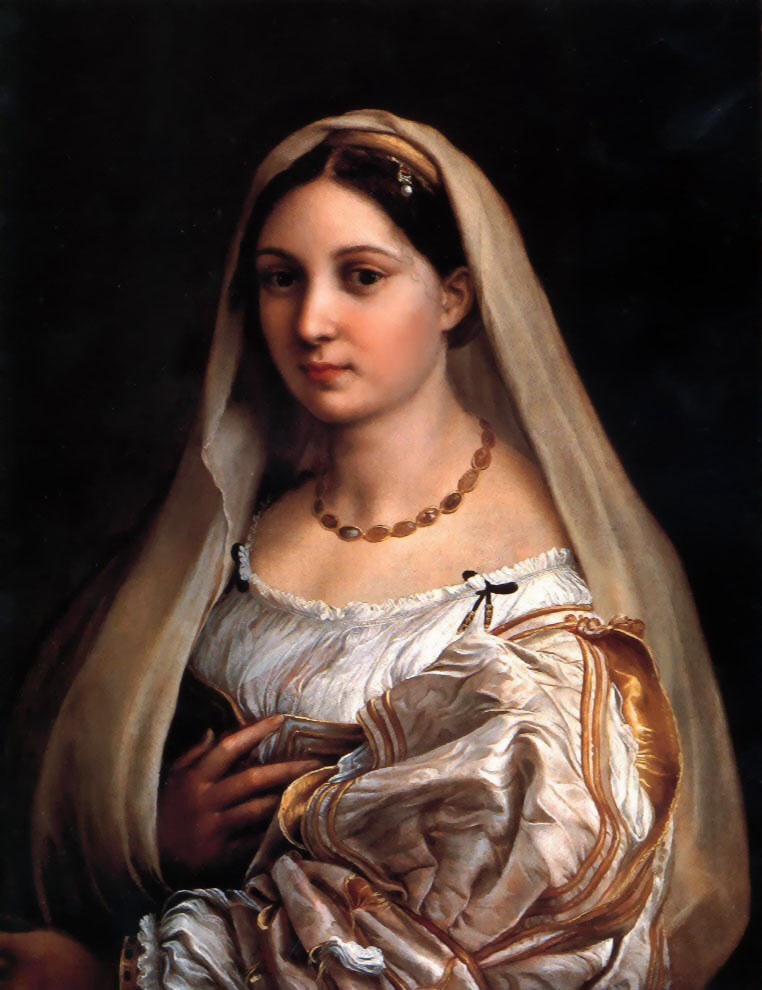
He mentions 28 paintings of the woman Raphael loved. Raphael had painted them and they were in his home. Her name was Francesco Luti and here's a portrait of her.

And he spent a lot of time with a painter named Angelica Kauffmann. He said she was always working, but never thought she did enough. Here is her self-portrait.

-------------------------------

He also mentions his poem about Hans Sachs as one he might want used at his funeral.

And a final quote from the book:

"What a disagreeable instrument the organ is! This struck me especially last night in St. Peter's, when it accompanied the choir at vespers. It does not blend with the human voice and it is much too loud."

Monday, October 15, 2007

Quotes About Books

A sampling of the quotes on this quotes page; I'd seen some of them before. These were some of the ones that were new to me:


I would be most content if my children grew up to be the kind of people who think decorating consists mostly of building enough bookshelves. ~Anna Quindlen, "Enough Bookshelves," New York Times, 7 August 1991

It is what you read when you don't have to that determines what you will be when you can't help it. ~Oscar Wilde

Books serve to show a man that those original thoughts of his aren't very new after all. ~Abraham Lincoln

Books are the bees which carry the quickening pollen from one to another mind. ~James Russell Lowell

"Tell me what you read and I'll tell you who you are" is true enough, but I'd know you better if you told me what you reread. ~François Mauriac

Books are embalmed minds. ~Bovee

Having your book turned into a movie is like seeing your oxen turned into bouillon cubes. ~John LeCarre


Sunday, October 14, 2007

Goethe on Art

I didn't specifically group these; in the portion I happened to be reading tonight, it was just a coincidence that everything I happened to mark was about art. Maybe tonight's reading was heavier in the topic of art?

"What one needs to do is to look at [paintings] and then immediately look at Nature to learn what they saw in her and in one way or another imitated; then the mind is cleared of misconceptions, and in the end one arrives at a true vision of the relation between Nature and Art. I shall never rest until I know that all my ideas are derived, not from hearsay or tradition, but from my real living contact with the things themselves."

"I would say something about [a Medusa] if everything one could say about such a work were not a waste of breath. Works of art exist to be seen, not talked about, except perhaps in their presence. I am thoroughly ashamed of all the babbling about art in which I used to join."

"...I took a walk with a fellow countryman and we argued about the rival merits of Michelangelo and Raphael. I took the former's side, he the latter's, and we ended up in joint praise of Leonardo da Vinci."

About a bust of Goethe commissioned by the Prince of Waldeck and sculpted by Alexander Trippel:

"My bust has turned out exceedingly well and everybody is satisfied with it. It is executed in a noble style, and I shall have no objection if posterity imagines I looked like that."


And here is that bust:

Wednesday, October 10, 2007

Goethe in Sicily

More quotes from Italian Journey.

"Today we were shown Prince Torremuzza's collection of coins. I went there almost reluctantly. I understand too little about this field, and a merely inquisitive tourist is the bane of the true connoisseur. But, after all, one has to begin somewhere . . ."

This relates to a Prince collecting money for a charity:
"'If, I said, 'instead of spending vast sums on follies for his villa, he had used them for this cause, no prince in the world would have accomplished more.' My shopkeeper disagreed: 'Aren't we all like that? We pay gladly for our follies but we expect others to pay for our virtues.'"

Berating himself for allowing himself to get side-tracked from a scenic walk in order to solve the puzzle of finding the 'promal plant' from which all other plants came:
"Why are we moderns so distracted, why do we let ourselves be challenged by problems which we can neither face nor solve?"

"Under the shelter of an airy pergola attached to a miserable inn, we took a light midday meal. Dogs greedily gobbled up the discarded skins of our sausages; a beggar boy chased them away and hungrily consumed our apple pairings until he, in his turn, was chased away by an old beggar. Professional jealousy is to be found everywhere."

"On the higher slopes of the mountains we still found olive, carob and mountain ash. Here cultivation follows a three-year cycle - beans, corn and rest. Manure, the peasants say, works greater miracles than the saints."

And there's that word again:

"In the detritus of the river, more quartz, some plain, like breccia."
The Temple of Concord in Sicily, where Goethe raved about a sarcophagus.


Tuesday, October 09, 2007

Goethe Visits the Hamiltons

An interesting rabbit trail in Goethe's Italian Journey--

"Sir William Hamilton, who is still living here [in Naples] as English ambassador, has now, after many years of devotion to the arts and the study of nature, found the acme of these delights in the person of an English girl of twenty with a beautiful face and a perfect figure. He has had a Greek costume made for her which becomes her extremely. Dressed in this, she lets down her hair and, with a few shawls, gives so much variety to her poses, gestures, expressions, etc., that the spectator can hardly believe his eyes. He sees what thousands of artists would have liked to express realized before him in movements and surprising transformations - standing, kneeling, sitting, reclining, serious, sad, playful, ecstatic, contrite, alluring, threatening, anxious, one pose following another without a break. She knows how to arrange the folds of her veil to match each mood, and has a hundred ways of turning it into a headdress. The old knight idolizes her and is enthusiastic about everything she does."

----------------

I was intrigued, so I looked up Sir William Hamilton to see if he'd ever been painted with his young wife, and discovered that she was famous in her own right. She was later the famed long-time mistress of Lord Horatio Nelson, had a daughter with him, and was devoted to Nelson until he died. But she squandered everything he left her and died in poverty in her fifties. She and Nelson had always pretended that the daughter was adopted (because they weren't married) and, even years and years later, the daughter herself refused to ever admit that Emma had been her mother. Emma is the subject of the Vivien Leigh/Laurence Olivier movie, That Hamilton Woman. When she so impressed Goethe, she probably presented an image similar to this painting of her:


----------------------

And here's another interesting quote from the same book, Italian Journey, by Goethe.

"The storms of the last days have presented us with the picture of a magnificent sea and allowed me to study the motions and the forms of the waves. Nature is, indeed, the only book whose every page is filled with important content.
"The theatre, on the other hand, no longer gives me any pleasure . . . To me the theatre is merely a peepshow on a larger scale. I seem to have lost my taste for such things."