I'm reading The Path to Rome - I was thinking it might be a useful geography text for AO Year 12, which would be nice since it's online (Goethe's isn't), but I'm not sure it will be academic enough. Belloc is a lot of fun, though, so I'm going to read it anyway.
Here's a nice quote from his preface. I've been reading aloud the funny bits to Tim. This bit isn't so much funny as it is quotable.
"Let us love one another and laugh. Time passes, and we shall soon laugh no longer--and meanwhile common living is a burden, and earnest men are at siege upon us all around. Let us suffer absurdities, for that is only to suffer one another."
Wednesday, October 24, 2007
Quote from Hilaire Belloc's Preface

Monday, October 22, 2007
Bringing up some old stuff
It's that time again - fall! Here are Tim's fall pictures although they're not from this year.
I gathered links from some of Tim's pictures and posts on our blog and put them in one easily accessible place for reference.
Friday, October 19, 2007
One of my New Hangouts
I don't keep up with news much - just enough to know the gist of what's going on in the world, but not enough to know about the latest horrific crime. On my Yahoo page, I changed my page so it shows Entertainment News instead of World News. So now I don't hear about every bomb, murder or salmonella poisoning - but I know who's getting married, having a baby or won an award. And I sleep much better.
While I was looking for something else, I stumbled onto this Celebrity Baby Blog. Pictutes of celebrities with their kids. New postings every day of the latest starlet's newborn, or famous Dad taking his toddler to the park. Very sweet.
Thursday, October 18, 2007
Movie Review Links
This is silly. I have a page for my own personal links but the only time I've used it in the last year or more is to check on movies, to see if they're family-friendly (although now we have a ClearPlay video player, so we can filter most movies!)
So I might as well have those links here. Here they are, and I'll put them in my sidebar later. I'm at my blog a lot more often than I'm at my webpage, so it'll be a lot more convenient.
Family-friendly film reviews
Charity's Place
Plugged In
Kids in Mind
I love Kids in Mind. They list every single incident that might cause offense, so their reviews look like this:
A girl calls a boy a name, and he calls her one back.
A boy kisses a girl.
A man's arm is torn off.
Kids throw food at each other.
A floor is shown with food all over it.
Two cars collide and burst into flame.
I appreciate the fact that they don't miss a thing, and I find their format of listing these things entertaining. :)
Wednesday, October 17, 2007
How's My Reading Going?
I made my own AO-ish reading schedule for two terms along with the boys' school schedules. I'm keeping up with it okay, but narrations have gone by the wayside (except for the ones from Golden Windows, because I might need synopses of each chapter to schedule specific ones later if it's used for AO).
Golden Windows is easy reading, but sometimes a little too moralistic. I think selected chapters may be useful. The nice thing about this book is that the chapters are short and not too difficult to understand, like parables From Nature.
Stories from Herodotus is boring, hard to follow, and unpleasant because it talks about wars, battle plans and cruel deeds - such as kings killing the little sons of men who disappointed them. It confirms my belief that history is nothing more than one bloodbath after another, at least political history. I much prefer to read what people ate, what kind of houses they lived in and how they parented and educated their children.
Stories from the Greek Tragedians isn't so political, but filled with lots of sad episodes. At least it's more interesting.
Scotland's Story is pretty good. Maybe I just like anything by H.E. Marshall. She has a way of adding in the kind of details I like, rather than go through one horrific war after another. After this book, I've decided to read her history of Germany. I've always wanted to know more about these places and their history, and her children's books are an enjoyable and painless way to do that.
Tuesday, October 16, 2007
Last Goethe Quote
I finished Italian Journey. I'm linking some of the painters he discussed in the book.
Christoph Henrich Kniep accompanied him and did some drawings for him of the places they saw. He might be considered the equivalent of "official journey photographer," except he had to draw sketches because this was before cameras. He said that Kniep lacked confidence although he was actually a good artist. It would be nice to have a copy of Goethe's book that included the drawings he did of the trip. I don't know if such a book exists. I don't even know if many of those sketches still exist.
The news of Jean-germain Drouais's death from smallpox at age 25 in 1788 "greatly distressed our artistic colony." I looked up some of his paintings and he was a good artist. The painting Goethe liked was a life-sized depiction of Philoctetes, uncompleted when he died.
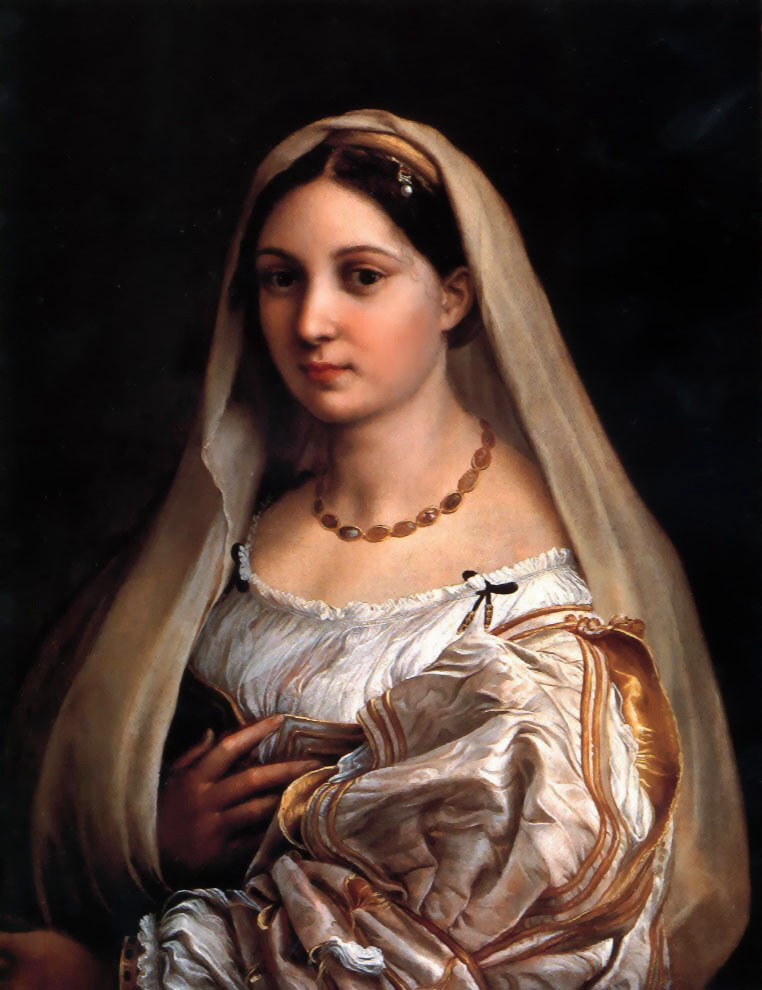
He mentions 28 paintings of the woman Raphael loved. Raphael had painted them and they were in his home. Her name was Francesco Luti and here's a portrait of her.
And he spent a lot of time with a painter named Angelica Kauffmann. He said she was always working, but never thought she did enough. Here is her self-portrait.
-------------------------------
He also mentions his poem about Hans Sachs as one he might want used at his funeral.
And a final quote from the book:
"What a disagreeable instrument the organ is! This struck me especially last night in St. Peter's, when it accompanied the choir at vespers. It does not blend with the human voice and it is much too loud."
Monday, October 15, 2007
Quotes About Books
A sampling of the quotes on this quotes page; I'd seen some of them before. These were some of the ones that were new to me:
I would be most content if my children grew up to be the kind of people who think decorating consists mostly of building enough bookshelves. ~Anna Quindlen, "Enough Bookshelves," New York Times, 7 August 1991
It is what you read when you don't have to that determines what you will be when you can't help it. ~Oscar Wilde
Books serve to show a man that those original thoughts of his aren't very new after all. ~Abraham Lincoln
Books are the bees which carry the quickening pollen from one to another mind. ~James Russell Lowell
"Tell me what you read and I'll tell you who you are" is true enough, but I'd know you better if you told me what you reread. ~François Mauriac
Books are embalmed minds. ~Bovee
Having your book turned into a movie is like seeing your oxen turned into bouillon cubes. ~John LeCarre
Sunday, October 14, 2007
Goethe on Art
I didn't specifically group these; in the portion I happened to be reading tonight, it was just a coincidence that everything I happened to mark was about art. Maybe tonight's reading was heavier in the topic of art?
"What one needs to do is to look at [paintings] and then immediately look at Nature to learn what they saw in her and in one way or another imitated; then the mind is cleared of misconceptions, and in the end one arrives at a true vision of the relation between Nature and Art. I shall never rest until I know that all my ideas are derived, not from hearsay or tradition, but from my real living contact with the things themselves."
"I would say something about [a Medusa] if everything one could say about such a work were not a waste of breath. Works of art exist to be seen, not talked about, except perhaps in their presence. I am thoroughly ashamed of all the babbling about art in which I used to join."
"...I took a walk with a fellow countryman and we argued about the rival merits of Michelangelo and Raphael. I took the former's side, he the latter's, and we ended up in joint praise of Leonardo da Vinci."
About a bust of Goethe commissioned by the Prince of Waldeck and sculpted by Alexander Trippel:
"My bust has turned out exceedingly well and everybody is satisfied with it. It is executed in a noble style, and I shall have no objection if posterity imagines I looked like that."
And here is that bust:
Miss M'isms
Miss M is almost four, but there are still some reminders that she's got a ways to grow. These are things she still says pretty regularly.
"passidy" (instead of pacifier)
"pampanks" (pancakes)
"buckle me out" when she wants out of her car seat
And these are typical--
"Turn it on wild!" (turn the water on harder.)
"When I grow up, I want to be a motorcycle lady. And I'll marry a motorcycle man and have children and their names will be Tally, etc."
"Mommy, why didn't you name me Harry when I was born? My real name's Harry." I'm not sure why she's stuck on the name Harry. Maybe she's thinking of "hairy"? She also likes to be "Lisa," but I can trace that one to Corduroy.
And she's proposed to her Daddy, all of her brothers, and her best friend, C.
Saturday, October 13, 2007
Goethe on Imagination, Plants, and Work
Quotes from tonight's reading of Italian Journey.
"A thousand times I have heard people complain that some object they had known only from a description was disappointing when seen in reality, and the reason was always the same. Imagination is to reality what poetry is to prose: the former will always think of objects as massive and vertical, the latter will always try to extend them horizontally."
I'm not sure I understand what he's talking about, but it certainly is food for thought.
"Let me say briefly what I think about the ancient writers and us moderns. They represented things and persons as they are in themselves, we usually represent only their substantive effect: they depicted the horror, we depict horribly; they depicted the pleasing, we pleasantly, and so on. Hence all the exaggeration, the mannerisms, the false elegance and the bombast of our age. Since, if one aims at producing effects and only effects, one thinks that one cannot make them violent enough."
Look, look! I just posted about Goethe's unifying/Primal Plant theory, and it showed up in what I read this evening!
"I must tell you confidentially that I am very close to the secret of the reproduction and organization of plants, and that it is the simplest thing imaginable. This climate offers the best possible conditions for making observations. To the main question - where the germ is hidden - I am quite certain I have found the answer; to the others I already see a general solution, and only a few points have still to be formulated more precisely. The Primal Plant is going to be the strangest creature in the world, which Nature herself shall envy me. With this model and the key to it, it will be possible to go on for ever inventing plants and know that their existence is logical; that is to say, if they do not actually exist, they could, for they are not the shadowy phantoms of a vain imagination, but possess an inner necessity and truth. The same law will be applicable to all other living organisms."
And here's an interesting defense of Naples workers, who were accused across the board of being lazy:
"...all of them work not merely to live, but to enjoy themselves: they wish even their work to be a recreation."
It sounds like us today - it's hard to imagine that such an attitude about enjoying one's work could have seemed novel at one time.
Subscribe to:
Comment Feed (RSS)